
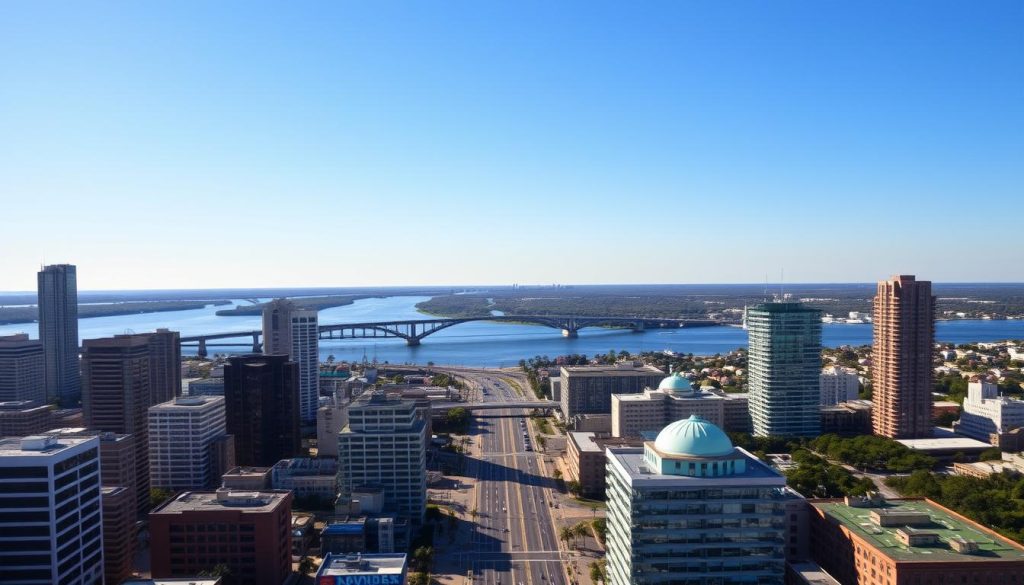
Every 24 hours, an average of 126 people pack up their lives and make Jacksonville their new home, making it the fastest-growing major city in Florida. This surge in population tells a compelling story about Jacksonville Florida living that goes beyond simple statistics.
We understand that moving to Jacksonville represents a major life decision. The city attracts thousands of new residents each year with its unique blend of urban amenities and coastal charm. Our Jacksonville relocation guideexamines both the bright spots and the challenges you’ll face in this sprawling metropolis.
Jacksonville offers a distinct lifestyle that sets it apart from other Florida cities. From affordable neighborhoods to pristine beaches, the pros and cons Jacksonville residents experience shape daily life in unexpected ways. We’ll help you navigate these factors to determine if this coastal city aligns with your goals and expectations.
Key Takeaways
- Jacksonville spans 875 square miles, making it the largest city by area in the continental United States
- The median home price sits below the national average at approximately $315,000
- Year-round temperatures range from 50°F to 90°F with 221 sunny days annually
- The city hosts 22 miles of Atlantic coastline with public beach access
- Major employers include Mayo Clinic, Naval Air Station Jacksonville, and Bank of America
- Hurricane season runs from June through November, requiring storm preparedness
- The Jacksonville lifestyle combines small-town community feel with big-city opportunities
What are the pros and cons of living in Jacksonville, Florida?
Jacksonville offers a mix of benefits and challenges for those considering moving here. We’ll examine the Jacksonville advantages and disadvantages to aid in your decision. The city’s expansive beaches and growing economy are major draws, attracting thousands annually.

Understanding Jacksonville’s Appeal and Challenges
Jacksonville’s size is impressive, making it the largest city in the continental U.S. It boasts year-round sunshine, no state income tax, and affordable housing. The city has 22 miles of beaches, a vibrant arts scene, and job growth in healthcare, finance, and logistics.
Yet, Jacksonville faces hot, humid summers and hurricane risks. Traffic and urban sprawl can complicate commutes. Some areas also struggle with higher crime rates.
Key Factors to Consider Before Moving
Before making the move, consider these key points:
- Housing costs vary significantly by neighborhood
- Hurricane preparedness is necessary
- Car ownership is almost essential due to limited public transit
- Summer humidity levels reach 70-90%
- Job opportunities concentrate in specific sectorsDuval County
How Jacksonville Compares to Other Florida Cities
In comparing Florida cities, Jacksonville’s affordability shines. It costs 30% less to live in Jacksonville than in Miami. Jacksonville and Tampa have similar job markets, but Jacksonville offers more space and lower housing costs. Jacksonville’s relaxed vibe contrasts with Miami’s hustle and Tampa’s tourist scene.
Cost of Living and Housing Market in Jacksonville
Considering a move to Jacksonville requires a deep dive into the financial scene. The city strikes a balance between affordability and quality of life, with living expenses 6% lower than the national average. This makes it a prime spot for families, young professionals, and retirees seeking Florida’s warmth without the high cost.
Average Home Prices and Rent Costs
The Jacksonville real estate market offers a wide range of options for buyers and renters. Median home prices are around $315,000, making it easier to own a home compared to other Florida cities. Renters will find two-bedroom apartments averaging $1,400 monthly, keeping costs in check.

Property Taxes and Insurance Considerations
Jacksonville’s property taxes average 1.03%, a middle-of-the-pack rate in Florida. While competitive, homeowners should also consider insurance costs. The coastal location and hurricane risk push premiums up, adding $2,000-$3,000 annually to housing expenses.
Utilities and Daily Living Expenses
Utilities in Jacksonville average $150-$200 monthly for a typical household. Grocery, transportation, and healthcare costs are in line with national averages, simplifying budget planning. The market’s appeal lies in its financial predictability and Florida’s tax benefits.
Weather and Climate Throughout the Year
When considering a move to Jacksonville, grasping the local weather patterns is essential. The climate here is subtropical, influencing our daily lives in distinct ways. We experience warm conditions for most of the year, making outdoor activities a staple of our lifestyle.
Summer in Jacksonville is hot and humid. Temperatures often soar above 90°F from June to September. The humidity can be overwhelming, with moisture levels often over 70%. Afternoon thunderstorms offer a brief respite, contributing to our annual rainfall of about 52 inches. These storms usually hit between 2 PM and 6 PM.

Winter brings a welcome reprieve from the heat. From December to February, Jacksonville’s weather is remarkably pleasant. Daily temperatures average around 65°F, ideal for outdoor activities without the summer’s sweat. Frost is rare, occurring maybe once or twice a season. This mild climate attracts many snowbirds seeking refuge from northern winters.
Hurricane season requires our vigilance from June to November. While direct hits are rare, we must stay prepared for storms. The Jacksonville weather service keeps us updated on approaching systems. Most years, we avoid major incidents, but preparedness is key for every household.
Spring and fall are our favorite seasons in Jacksonville. These periods offer comfortable temperatures and lower humidity. With approximately 221 sunny days annually, we have ample opportunities for beach visits, golf, and outdoor dining throughout the year.
Job Market and Economic Opportunities
Jacksonville’s economy is rich with diverse opportunities for job seekers and entrepreneurs. Its status as a major port and transportation hub fosters a vibrant business environment. With unemployment rates consistently below the Florida state average, Jacksonville’s job market is robust in several key sectors.
Major Industries and Employers
The Jacksonville economy thrives on a blend of traditional and emerging industries. Healthcare stands out, with Mayo Clinic employing over 7,000 people locally. Financial services also play a significant role, with Bank of America maintaining major operations centers here. Naval Air Station Jacksonville significantly contributes to careers in defense and aerospace.
- Healthcare and biotechnology
- Financial services and insurance
- Transportation and logistics
- Defense and aerospace
- Technology and innovation
Average Salaries and Career Growth
The median household income in Jacksonville is about $58,000, slightly higher than many other Florida cities. Healthcare and finance careers typically offer salaries 15-20% above the local average. Entry-level positions start around $35,000 annually, while experienced professionals in specialized fields can earn over $100,000.
Remote Work Opportunities
Jacksonville’s business landscape has seen a significant expansion in remote work opportunities. Many local companies now offer hybrid arrangements, allowing professionals to balance office and home work. Tech startups and established corporations alike embrace flexible work policies, making Jacksonville employment attractive to digital nomads and remote workers seeking an affordable coastal lifestyle.
Education System and Schools
Understanding the educational landscape in Jacksonville is key for families considering a move. The city boasts a wide range of educational options, from public schools to esteemed private institutions and top universities. Education in Jacksonville covers all levels, from elementary to graduate programs, catering to students at every stage.
Public School Rankings and Performance
Duval County schools educate over 130,000 students. Among Jacksonville’s schools, Stanton College Preparatory School stands out as one of Florida’s leading public schools. The district boasts more than 200 schools, featuring magnet programs, career academies, and International Baccalaureate options.
Test scores in Duval County schools show variations by neighborhood. Schools in areas like Mandarin and San Jose often outperform district averages. Parents can select from a variety of specialized programs, including:
- STEM-focused academies
- Arts and humanities magnets
- Dual enrollment opportunities
- Career and technical education pathways
Private School Options
Private education in Jacksonville is marked by institutions like The Bolles School, known for its Olympic athletes and notable alumni. Other notable private schools include Episcopal School of Jacksonville and Bishop Kenny High School. These schools are known for their smaller class sizes and specialized curricula.
Higher Education Institutions
Jacksonville universities offer outstanding opportunities for higher education. The University of North Florida is the city’s largest public university, while Jacksonville University provides a private liberal arts education. Florida State College at Jacksonville makes education accessible with multiple campuses across the city. These colleges play a vital role in the local economy and culture.
Healthcare and Medical Facilities
Access to quality healthcare is a top priority when considering a move to a new city. Jacksonville’s healthcare system is a standout, with top-notch facilities available throughout Northeast Florida. This ensures residents have access to the best medical care.
At the heart of Jacksonville’s medical scene is Mayo Clinic’s Florida campus. This institution offers advanced treatments and research opportunities. Baptist Health operates five hospitals in Jacksonville, making quality care readily available to all.
UF Health Jacksonville is both a teaching hospital and trauma center. It trains future doctors while providing specialized care. Wolfson Children’s Hospital is the only pediatric facility in the region, providing a wide range of services for children.
Our city boasts over 20 major medical facilities. This competition benefits patients in several ways:
- Shorter wait times for appointments
- Multiple specialists in every field
- Advanced treatment options typically found only in larger metropolitan areas
- Insurance network flexibility
Jacksonville’s health services go beyond hospitals. We have numerous urgent care centers, specialty clinics, and outpatient facilities. This extensive network makes our city the medical hub for North Florida and South Georgia. It attracts patients seeking treatments not available in smaller communities.
Transportation and Infrastructure
Understanding Jacksonville’s transportation options is key to navigating the city. Spanning over 840 square miles, it’s the largest in the continental U.S. Despite its size, the average commute time is just 27 minutes. This layout affects how people get around, making some transportation methods better for certain areas.
Public Transit Options
The Jacksonville Transit Authority (JTA) oversees the city’s bus and Skyway monorail systems. The bus network spans major areas with 35 routes, though frequency varies. The Skyway connects downtown’s business districts with a 2.5-mile automated track. Yet, most residents use personal vehicles due to limited transit in suburbs.
Highway Systems and Traffic Patterns
Jacksonville’s highway network is vast, connecting the city. Key routes include:
- I-95 running north-south along the eastern corridor
- I-295 creating a beltway around the city
- I-10 crossing east-west through downtown
Rush hour traffic is heavy, with the Fuller Warren Bridge and I-95/I-295 interchange being the worst. Weekend traffic to Atlantic and Neptune beaches also causes delays.
Walkability and Bike-Friendly Areas
Most areas in Jacksonville require cars for daily tasks. Riverside, San Marco, and downtown are more walkable, with shops and restaurants nearby. The city is adding bike lanes, including along the St. Johns River and in urban areas. Beach communities like Atlantic Beach are also becoming more bike-friendly.
Entertainment and Recreation Options
Jacksonville boasts a wide array of entertainment options for all ages and preferences. From top-tier museums to lively sports venues, there’s always something exciting to do. Every day of the week brings new opportunities for fun and discovery.
The Jacksonville Zoo and Gardens is a must-visit for families. Here, you can see over 2,000 animals and 1,000 plant species. The Cummer Museum of Art and Gardens offers a serene experience with its beautiful riverfront setting and vast art collection spanning 5,000 years.
Sports enthusiasts flock to TIAA Bank Field to watch Jacksonville Jaguars games. The atmosphere is electric, making game days unforgettable. For those seeking nightlife, Riverside and San Marco are the places to be. These areas are filled with:
- Locally owned craft breweries
- Farm-to-table restaurants
- Live music venues
- Art galleries and boutique shops
Jacksonville’s dining scene is as diverse as its attractions. From laid-back beachside spots to fine dining establishments, the city’s cuisine is a highlight. Fresh seafood is a staple, reflecting Jacksonville’s coastal heritage.
Every year, Jacksonville hosts the Jacksonville Jazz Festival, a major free jazz event. It transforms downtown into a vibrant music hub, attracting thousands. The city also offers outdoor concerts, food truck gatherings, and cultural festivals, celebrating its rich diversity.
Beach Life and Outdoor Activities
Living in Jacksonville means enjoying 22 miles of stunning Atlantic coastline and countless ways to stay active outdoors. Whether we prefer relaxing on sandy shores or exploring vast nature preserves, Jacksonville offers year-round opportunities for outdoor enthusiasts. From world-class beaches to pristine waterways, our city provides the perfect backdrop for an active coastal lifestyle.
Popular Beaches and Coastal Areas
Jacksonville beaches stretch along the Atlantic Ocean, each with its own character. Jacksonville Beach serves as the main hub with its famous pier, beachfront restaurants, and lively atmosphere. Neptune Beach offers a more laid-back vibe with charming local shops and quieter stretches of sand. Atlantic Beach rounds out our coastal trio with family-friendly areas and excellent surf spots.
These beaches stay busy year-round thanks to our mild climate. We can enjoy: • Swimming and sunbathing from March through November • Beach volleyball courts at multiple locations • Beachfront concerts and festivals • Dog-friendly zones for our four-legged friends
Parks and Nature Preserves
Jacksonville parks cover an impressive 80,000 acres throughout the city. The Timucuan Ecological and Historic Preserve stands out as one of the nation’s largest urban park systems. We can explore salt marshes, coastal dunes, and hardwood forests all within city limits.
Water Sports and Fishing Opportunities
Jacksonville fishing ranks among the best in Florida. The St. Johns River provides excellent freshwater fishing, while our ocean access offers saltwater angling. Popular Jacksonville outdoor activities on the water include kayaking through peaceful creeks, paddleboarding in calm inlets, and surfing Atlantic waves.
Crime Rates and Safety Concerns
When considering a move to a new city, understanding the crime rate is a top priority. Jacksonville faces challenges with property crimes, occurring about 40% more frequently than the national average. Yet, safety varies significantly across different areas. Many residents live comfortably in secure communities.
Neighborhood Safety Rankings
Not all Jacksonville neighborhoods face the same safety challenges. Areas like Mandarin and Nocatee consistently rank as safe. These communities benefit from active resident involvement and well-maintained properties. Other neighborhoods worth considering include:
- Neptune Beach and Atlantic Beach
- Bartram Park
- Deerwood
- San Marco
Police Response Times
The Jacksonville police maintain an average response time of six minutes for emergency calls. The Jacksonville Sheriff’s Office operates multiple zones to ensure quick coverage. Patrol officers regularly engage with communities through various programs to build trust and prevent crime.
Community Watch Programs
Active neighborhood watch programs enhance Jacksonville safety in many areas. These volunteer groups work directly with the police to report suspicious activities and organize community meetings. Participation in these programs often correlates with lower crime rates, making them attractive for families seeking secure living environments.
Natural Disaster Risks and Preparedness
Living in Jacksonville means we must face the reality of natural disasters. Our coastal location makes us susceptible to various weather events, mainly during the Atlantic hurricane season from June to November. We’ve seen significant storms like Hurricane Irma in 2017 and Hurricane Matthew in 2016. These storms brought powerful winds and severe flooding to many neighborhoods.
Jacksonville hurricanes are our biggest threat. The city’s location makes it a prime target for tropical systems moving up the coast. Our emergency management team closely tracks storms and provides regular updates through multiple channels. It’s essential to stay informed about evacuation routes, which are critical for those living in flood-prone areas near the St. Johns River or Atlantic coast.
Jacksonville flooding varies by neighborhood, based on flood zone designations. Areas classified as Zone A or Zone V face the highest risk and require flood insurance. Even inland neighborhoods can experience flooding during heavy rainfall. We recommend checking FEMA flood maps to understand your property’s risk level.
Jacksonville emergency preparedness begins with having a plan. We should maintain emergency supplies, including:
- Water (one gallon per person per day for three days)
- Non-perishable food for three days
- Battery-powered radio and flashlights
- First aid kit and medications
- Important documents in waterproof containers
- Cash and credit cards
The city activates evacuation orders based on storm severity and projected path. Main evacuation routes include I-95, I-10, and US-301. We must know our zone and have multiple route options planned before any storm threatens our area.
Conclusion
We’ve delved into the various facets of life in Jacksonville to aid your decision-making. This summary highlights a city with notable benefits and some hurdles to ponder. The affordable housing market opens doors for many families to become homeowners. The city’s robust job market in healthcare, finance, and logistics offers promising career paths. Plus, the year-round sunshine and extensive beaches provide an unparalleled outdoor lifestyle.
Our detailed pros and cons overview sheds light on critical factors to consider. The summer heat and humidity can be overwhelming from June to September. Hurricane season necessitates thorough preparation and planning annually. The need for a car is prevalent due to the limited public transit options. Crime rates differ significantly across neighborhoods, underscoring the importance of thorough research when selecting a residence.
The verdict on relocating to Jacksonville hinges on your personal values and lifestyle preferences. If you cherish affordable coastal living, outdoor activities, and economic prospects, Jacksonville is an excellent choice. It suits those who relish warm weather, are comfortable with driving, and value spacious living environments. Budget-conscious families, young professionals, and retirees often find Jacksonville meets their requirements effectively.
When contemplating a move to Jacksonville, it’s essential to weigh the positives against the realities. The city’s burgeoning economy, reasonable cost of living, and access to beaches make it attractive. Yet, the extremes in weather, transportation needs, and safety concerns demand a thorough assessment. We suggest exploring different neighborhoods, engaging with current residents, and experiencing Jacksonville firsthand before making your decision.
FAQ
What is the average cost of living in Jacksonville compared to other major Florida cities?
Jacksonville’s cost of living is about 6% lower than the national average. This makes it more affordable than many Florida cities. With median home prices around $315,000 and average two-bedroom apartment rent at $1,400, Jacksonville offers better value. Miami’s median homes cost over $600,000, and Orlando’s similar rentals average $1,800 monthly.
How bad are the hurricanes in Jacksonville, Florida?
Jacksonville faces hurricane risk from June to November. Its northeast coastal position offers some protection compared to southern areas. The city has seen impacts from storms like Hurricane Irma and Matthew. Direct hits are less common than in South Florida.We recommend keeping emergency supplies and understanding evacuation routes. Most storms bring heavy rain and wind, not catastrophic damage.
Is Jacksonville a good place to raise a family?
Jacksonville is a great place for families. It has diverse neighborhoods, quality schools like Stanton College Preparatory, and 80,000 acres of parks. The Jacksonville Zoo and Gardens, beaches, and outdoor activities provide endless family fun.Yet, families should research neighborhoods carefully. School quality and safety vary across the city’s vast 875 square miles.
What are the best neighborhoods to live in Jacksonville?
Several neighborhoods stand out for different reasons. Mandarin is known for its schools and family-friendly atmosphere. Riverside and San Marco offer walkable urban living with historic charm. Neptune Beach and Atlantic Beach provide a coastal lifestyle.Nocatee is a newer community with modern amenities and lower crime rates.
How is the job market in Jacksonville for young professionals?
Jacksonville’s diverse economy offers opportunities in healthcare, finance, logistics, and tech. Major employers like Mayo Clinic, Bank of America, and CSX Corporation provide stable careers. With a median household income of $58,000 and unemployment below Florida’s average, young professionals find opportunities.Yet, salaries are generally lower than in Miami or Tampa.
Do you need a car to live in Jacksonville?
Owning a car is essential in Jacksonville. The city’s 875-square-mile area makes public transportation challenging. Jacksonville Transit Authority buses and the Skyway monorail serve only select routes.Most neighborhoods lack walkability for daily errands. Average commute times are 27 minutes, making personal vehicles the primary mode of transportation.
What is healthcare like in Jacksonville?
Jacksonville boasts an exceptional healthcare infrastructure. Mayo Clinic’s Florida campus, Baptist Health’s five-hospital system, UF Health Jacksonville, and Wolfson Children’s Hospital are key players. The city serves as Northeast Florida’s medical hub, providing specialty care found in larger cities.
How hot and humid does Jacksonville get in the summer?
Summer in Jacksonville is hot and humid from June to September. Temperatures often reach 90°F, with humidity making the heat index over 100°F. Afternoon thunderstorms offer some relief but contribute to the 52 inches of annual rainfall.We recommend preparing for high air conditioning costs and planning outdoor activities for early morning or evening hours during peak summer months.