
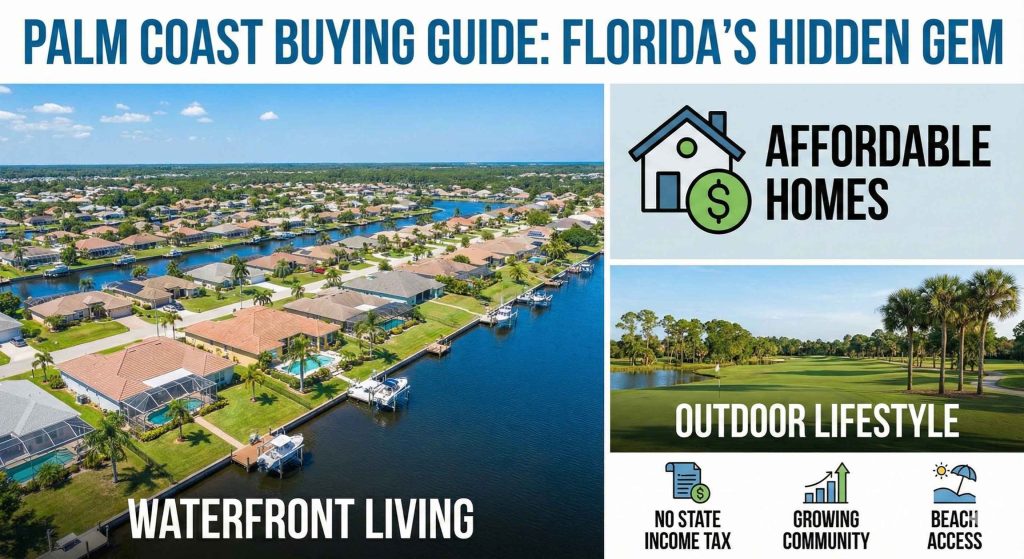
Could coastal living feel like a quiet, affordable retreat? This guide shows how Palm Coast—nestled between Daytona Beach and St. Augustine—blends beach access, golf, parks, and relaxed suburban life so you can weigh lifestyle and practicality.
Move from browsing to confident offers by focusing on the local real estate drivers: resort-style amenities, peaceful streets, and preserved parkland. We highlight neighborhoods, schools, beaches, cost considerations, and a clear step-by-step path so you can act with confidence.
Key Takeaways
- How Palm Coast fits different budgets and timelines near Daytona Beach and St. Augustine.
- What shapes local real estate demand—golf, waterfront access, and preserved green space.
- Where to look first: neighborhoods, schools, beaches, and carrying costs.
- Which steps deserve extra attention: pricing trends, timing, and inspections.
- A practical roadmap to move from search to winning offers on homes.
Start Here: How to Use This Buyer’s Guide for Living Palm Coast
Start your home search with a short, firm list of priorities. Pick a few must-haves and a few deal‑breakers so tours stay focused and comparisons are simple.
Set alerts for new listings and use the market snapshot in this guide to time your moves—decide when to tour, how quickly to make offers, and what to expect from local inventory.
Shortlist two or three neighborhoods to tour, then confirm fit by reviewing lifestyle, beaches, schools, and commute options that matter to your daily life.
Check carrying costs early: insurance, utilities, HOA fees, and taxes can change your monthly budget beyond the mortgage.
Follow a compact execution checklist: get prequalified, schedule tours, prepare offers, complete inspections, and close. Use the local services section to compare lenders and order inspections.
Take brief notes at each showing and revisit your priorities weekly—shift focus when a neighborhood or price band looks most promising.
Return to this planner through your search to keep decisions grounded in clear, local facts as you pursue living palm coast or moving palm coast with confidence.
Palm Coast Market Snapshot and Pricing Insights
Use this quick market snapshot to set realistic expectations and pace your search across neighborhoods. Below are the main trends buyers see now, rewritten as practical guidance so you can act without getting bogged down in exact figures.
What homes cost today
The market ranges from entry-level options to higher-end waterfront and resort-style listings. Overall activity is moderately competitive: desirable homes often attract quick interest and sell near asking price. Popular property types include single-family homes, townhomes, and condos—each with different cost and maintenance profiles.
Seasonality and short-term outlook
Inventory shifts with the seasons, so new listings appear in predictable waves. Builders are adding new phases in several communities, creating fresh choices for buyers. Financing conditions continue to affect affordability, so plan around lender timing rather than chasing short-lived price swings.
Hot vs. steady segments
Waterfront and golf communities typically command premiums, while family-oriented neighborhoods and conventional single-family homes usually offer broader selection and value. Compare micro-markets by location and recent sale velocity to know where your offer will be most competitive.
What this means for you: focus on timing (watch new-listing spikes), property type fit (match maintenance and lifestyle to your priorities), and having financing ready so you can move quickly when a well-priced home appears.
Neighborhoods to Know in Flagler County and Nearby
Compare neighborhoods by the lifestyle they deliver—each community in the Palm Coast area offers different amenities, price points, and vibes so you can prioritize what matters most.
Grand Haven
Best for: upscale waterfront and resort living. A gated, golf-oriented community with marina and canal access and resort-style amenities; ideal if you want waterfront homes and a polished neighborhood feel.
The Hammock
Best for: ocean access and rental potential. Ocean-adjacent living with private beach access and golf options; condos and houses here tend to attract visitors, so check rental rules if short-term income is part of your plan.
Palm Harbour & Pine Lakes
Best for: families and everyday convenience. Established, family-friendly pockets with parks, trails, nearby shopping, and a range of single-family homes—good balance of schools and local services.
The Woodlands & Belle Terre area
Best for: privacy and nature. Larger lots and mature trees create a quieter, nature-forward setting that suits custom homes and buyers seeking a more secluded community while staying connected to nearby cities.
Flagler Beach area
Best for: beach-town lifestyle. A walkable oceanfront town with dining and shops that complements Palm Coast options for waterfront and beach-focused living—appealing if you want an active beach scene close by.
Lifestyle, Beaches, and Nature: Why Palm Coast Offers More
Picture weekends shaped by sunrise walks, salt air, and easy trips to uncrowded shoreline. Palm Coast pairs extensive shoreline and preserved green space with a relaxed, family-friendly vibe—perfect if you want coastal access without a nonstop tourist tempo.
Beaches you’ll frequent
Nearby beaches and coastal parks provide varied scenery—from rocky outcrops and gardened shorelines to wide sandy stretches. Each spot offers straightforward access and a distinct natural beauty, so you can pick quiet walks, shell collecting, or energetic beach days.
Parks, waterfront activities, and nature
Outdoor options are part of everyday life: paddling, fishing, and trail walks are common weekend plans. Local parks and boat ramps make water access easy, and preserved areas keep nature close to neighborhoods.
For special outings, guided experiences—like equestrian beach rides or eco tours—add memorable local flavor to your routine.
Dining and fine dining highlights
The dining scene ranges from casual waterfront spots to elevated restaurants that showcase coastal flavors. Use nearby St. Augustine and Daytona Beach for added cultural and dining variety on day trips while keeping a quieter home base in Palm Coast.
What weekends look like: a morning walk on the shore, an afternoon activity on the water or in a park, and an evening meal at a local restaurant—simple, outdoors-forward living that highlights natural beauty and a relaxed coastal lifestyle.
Schools and Education Access in Palm Coast
When schools matter, start locally: compare district performance, program options, and school culture in the neighborhoods you’re considering.
Flagler County Public Schools at a glance
Flagler County offers solid K–12 options with generally above‑average outcomes compared with many peers in the state. Pay attention to nearby campuses—elementary, middle, and high schools can vary by neighborhood—so identify a few target schools early in your search.
For families, key action items are simple: visit schools, review curriculum and extracurricular offerings, and check class sizes and support programs that matter to your children’s success.
Nearby higher education options
Regional colleges add convenience for continuing education and enrich local life—Flagler College in St. Augustine and other nearby institutions expand opportunities for adult learning and dual‑enrollment. Factor commute time and program fit into long‑term plans.
Before you write an offer, verify exact school boundaries for your preferred address and confirm enrollment timelines. These checks are essential when moving to Palm Coast and help avoid surprises for families settling into the area.
Cost of Living, Taxes, and Everyday Expenses
Understand typical carrying costs so you can build a realistic monthly budget. Overall local costs tend to be lower than many other coastal cities, though some categories—like utilities—can run higher than you might expect.
How local expenses compare
Housing is one of the main savings buckets in Palm Coast, which can free up funds for renovations, higher down payments, or extras. Transportation, groceries, and healthcare often feel affordable compared with larger metro areas, but remember to factor in ownership extras—home insurance, maintenance, and HOA fees all add to monthly carrying costs.
Quick budget checklist: estimate mortgage plus insurance and taxes, add HOA or maintenance, include utilities and routine upkeep, and leave room for repairs or improvements.
No state income tax and what it means for your budget
Florida’s lack of a state income tax reduces overall tax burden and can increase take‑home pay for many households. That makes the area attractive for retirees and working families alike, but don’t rely on tax savings alone—run insurance and utility quotes early to see your true monthly cost. [1]
When moving to Palm Coast, compare neighborhoods for total monthly carrying costs rather than headline price alone. Early due diligence on insurance and local service costs will help you avoid surprises after the move.
Safety and Peace of Mind: Understanding Palm Coast Crime Rates
Safety matters when choosing a neighborhood. Overall, Palm Coast’s crime profile is generally moderate and compares favorably with many similar-sized cities, but local conditions vary block by block.
Practical due diligence is more useful than raw numbers: review recent police reports, neighborhood-watch activity, and any HOA or gated-community security features before you commit.
Simple precautions improve day-to-day peace of mind—install exterior lighting, consider cameras, keep doors and windows secured, and get to know neighbors so you have local eyes on the street.
Safety checklist when touring:
- Visit at different times of day to judge lighting and activity.
- Ask the agent for recent incident reports or crime maps for the exact address.
- Check for neighborhood-watch groups and HOA security measures.
- Factor local risk into insurance quotes and monthly costs.
Make safety one objective among others — schools, commute, and lifestyle — so your new home fits your comfort level and long‑term plans when moving to Palm Coast.
Commute, Connectivity, and Weekend Access
Your weekly rhythm depends on easy trips to nearby cities and reliable road and internet connections. Palm Coast puts you within easy reach of St. Augustine and Daytona Beach for dining, events, and day trips, while most neighborhoods offer a quieter, more suburban pace.
Plan short trips to St. Augustine and Daytona Beach
Use nearby cities for occasional culture and dining. Think of St. Augustine and Daytona Beach as your go‑to options for museums, festivals, and a broader restaurant scene—great for weekend variety without changing your daily routine.
Getting around town: walkability and when you’ll want a car
Much of the area is car‑dependent, though downtown pockets are more walkable for errands and dining. Before you commit, map door‑to‑door commute times for work and school and test them at peak hours so the real commute fits your lifestyle.
Checklist for connectivity:
- Test commute times at rush hour on two different days.
- Verify home internet speeds and cell coverage for remote or hybrid work.
- Consider transit, rideshare, or carpool options for event nights.
- Check for bike trails and EV charging if those are part of your routine.
Balance proximity to beaches and parks with your workplace and schools so daily life stays predictable. Small planning steps up front make living in Palm Coast more convenient and let you enjoy the coastal access and nearby city options without surprise hassles.
Home Types and New Construction Opportunities
New builds and established styles coexist, giving buyers a range of choices for design and budget. Palm Coast neighborhoods include single-family homes, townhomes, and condos across master-planned communities and quieter pockets—so match the property type to your routine and cost tolerance.
Common property types and pros
Single-family homes: more space and privacy, better for yard needs and storage; typically higher maintenance but stronger long-term resale flexibility.
Townhomes: lower maintenance and shared upkeep, a middle ground for cost and convenience.
Condos: minimal exterior upkeep and shared amenities—good if you prefer convenience and lower yard responsibilities, but review HOA rules and fees closely.
Think through yard work, storage, HOA oversight, and monthly carrying costs when choosing a type—those factors shape daily life more than headline prices.
New construction and buyer checklist
Builders are adding phases in multiple communities, creating opportunities for incentives and customization. If you consider a new home, focus on warranties, builder timelines, and included energy or upgrade packages.
Quick checklist for new-build buyers:
- Confirm warranty coverage and what it includes.
- Ask about builder timelines and realistic move-in windows.
- Review energy-efficiency upgrades and long-term utility expectations.
- Compare HOA amenities and rules, and evaluate resale potential as the neighborhood matures.
Match the property to your lifestyle—whether a single-family estate, a low-maintenance condo, or a newly built home—and weigh immediate needs against future value in the Palm Coast market.
Palm Coast Buying Tips for Competitive Offers
When competition tightens, preparation and speed win homes. Use these Palm Coast buying tips to stay ready and act decisively when the right property appears.
Top tactics to win
- Get prequalified first. A lender letter and clear financing plan let you submit a complete offer quickly and show sellers you’re ready.
- Monitor new listings closely. Set portal alerts, check fresh inventory daily, and coordinate with your agent for quick showings and drive-bys.
- Organize your documents. Keep ID, proof of funds, and prequalification paperwork ready so you can move from showing to submission without delay.
- Bid competitively but protect your interests. Make realistic offers in a hot market, minimize nonessential contingencies, and always include an inspection contingency to protect your investment.
- Tailor terms to the seller. Flexibility on closing dates, earnest money, and inspection windows can make your offer more attractive without unnecessary risk.
- Debrief and refine. After each offer, review outcomes with your agent to tweak escalation approaches, appraisal-gap plans, and neighborhood norms for the next opportunity.
Focus on speed, clarity, and sensible risk management. When you combine readiness with targeted strategy, you increase your chances of winning the right home in Palm Coast’s real estate market.
Your Step-by-Step Buyer’s Path in Palm Coast
Start by locking in financing and a short list of requirements. Get prequalified, define your budget limits, must-haves, and deal-breakers so every tour stays focused.
Simple, actionable steps
- Define needs: list priorities for schools, commute, yard, and lifestyle before you begin touring neighborhoods.
- Tour targeted neighborhoods: visit two to three places that match your criteria; take notes on traffic, noise, and nearby conveniences.
- Analyze comps quickly: review recent sales in the exact micro-market to set a realistic offer range for each home you like.
- Prepare a clean offer: include lender letters and proof of funds; structure contingencies so you protect yourself while staying competitive.
- Order inspections promptly: schedule inspections right after contract acceptance and get contractor estimates if repairs are likely.
- Manage appraisal and underwriting: coordinate timing with your lender and respond promptly to requests so closing stays on track.
- Final walk‑through and closing: verify agreed repairs, review the settlement statement, and use secure wiring procedures for funds.
Move-in checklist: arrange utilities, change locks, set up local services, and schedule any immediate maintenance so your new home feels settled from day one.
Keep a shared timeline with your agent and vendors, and maintain digital copies of key documents. These small, organized steps make moving to Palm Coast smoother and help you enjoy your new home and local experience faster.
Local Services That Streamline Your Purchase
Lining up local professionals early shortens timelines and reduces surprises. Build a small, trusted team so you can move quickly when the right homes appear.
Trusted partners: lenders, inspectors, contractors, and closing support
Compare local lenders. Get multiple prequalification letters, ask about turn times and loan programs, and pick a lender who communicates clearly.
Hire licensed inspectors. Book general and specialty scopes (roof, pest/WDO, sewer where relevant) and schedule contractor estimates during the inspection window so repair costs are clear for negotiations.
Engage title or closing professionals. Choose a title company or attorney familiar with local practice, and get insurance and appraisal quotes early to avoid underwriting delays.
Use community referrals—your agent, neighbors, or local groups—to find dependable trades and moving services. Verify licenses, read recent reviews, and get at least two quotes before hiring contractors.
Keep an organized timeline with your agent and vendors and store digital copies of inspections, contracts, and closing papers. Save contractor and builder contacts for post‑close service and warranty needs.
Quick local services checklist:
- Get 2–3 lender quotes and a prequalification letter.
- Book inspectors with the right scopes and schedule contractor estimates.
- Choose title/closing support and lock in appraisal/insurance quotes.
- Collect referrals for movers, contractors, and service providers; verify licenses.
- Maintain a shared timeline and digital folder for all documents.
Conclusion
Use this compact roadmap to turn local knowledge into action. Narrow your budget, shortlist neighborhoods, and use a clear offer strategy so you’re ready when the right home appears in Palm Coast.
Balance lifestyle perks—beaches, parks, and preserved natural beauty—with practical needs like commute and schools. Follow the step‑by‑step path and lean on local services to move smoothly from search to keys in hand.
Ready to start? Get prequalified or schedule neighborhood tours with a local agent to begin your move to Palm Coast and explore what this growing coastal area offers for your family and future.